
11 Unique Tennessee Elopement Locations: A Local Photographer’s Guide

Last reviewed: July 11, 2026
Tennessee offers an unusual variety of elopement settings within a single state: misty mountain overlooks, open valleys, dramatic waterfalls, quiet forests, historic churches, rocky cliffs, and trails that feel far removed from everyday life.
Some of the best Tennessee elopement locations include Cades Cove, Fall Creek Falls State Park, Roan Mountain, Kuwohi, Foster Falls, Ozone Falls, and the Fiery Gizzard area. The right choice depends on how far you want to hike, how much privacy you need, the number of guests attending, the season, accessibility, and whether the location legally permits wedding ceremonies.
This guide compares 11 scenic places couples frequently consider. It also explains an important distinction: not every beautiful Tennessee overlook or waterfall is automatically an approved ceremony site. In some cases, the best plan is to hold the ceremony at a permitted location and visit a second destination for portraits.

I’m Nicole, a Nashville and Tennessee native with approximately 16 years of experience in the wedding industry. I photograph elopements through a combination of documentary storytelling and editorial, gallery-worthy portraiture. I also help couples think through locations, permits, timelines, access, lighting, weather, and the practical details that turn a beautiful idea into a day that feels effortless.
View the Destination Life Photography elopement portfolio to see how real landscapes, emotion, and artistic portraiture can work together.
Table of Contents
How to Choose a Tennessee Elopement Location
Quick Comparison of 11 Locations
Max Patch
Fall Creek Falls
Sunset Rock and Lookout Mountain
Alum Cave Bluffs
Ozone Falls
Roan Mountain
Cades Cove
Virgin Falls
Kuwohi
Raven’s Point
Foster Falls
Tennessee Elopement Cost Considerations
Best Locations for Different Couples
Photography Planning Advice
Frequently Asked Questions

How to Choose a Tennessee Elopement Location
The most beautiful location is not necessarily the best location for every couple. Before deciding, consider five practical questions.
1. Do you want an easy-access ceremony or an adventure hike?
An overlook reached from a parking area creates a very different wedding day from a nine-mile backcountry hike.
Neither experience is inherently better. The right choice depends on how you want to feel on the day, what you want to wear, who will attend, and how much of your photography coverage you want to spend traveling or hiking.
2. Will guests be joining you?
A couple may happily hike several miles with a photographer, while parents, grandparents, young children, or guests with mobility concerns may need a more accessible setting.
Guest count also matters because national parks and other public properties may impose limits on people, vehicles, ceremony duration, décor, and equipment.
3. Is the location approved for ceremonies?
A scenic destination appearing on social media does not mean weddings are allowed there.
Great Smoky Mountains National Park limits ceremonies to designated locations. Tennessee state parks generally require couples to obtain park approval or a special-use permit. Other public lands may require separate authorization for the ceremony, professional photography, transportation, or commercial services.
Always obtain current written approval from the agency managing the land before inviting guests or paying nonrefundable travel expenses.
4. How important are privacy and quiet?
Easy-access overlooks and famous waterfalls are rarely private during peak seasons. Sunrise, weekdays, off-season dates, and lesser-known permitted locations can help, but a public-land permit generally does not give a couple exclusive use of the area.
A photographer familiar with documentary storytelling can work around visitors while still preserving the quiet, connected feeling of the experience.
5. What kind of photographs matter most to you?
Consider whether you are drawn to:
Wide mountain landscapes
Waterfalls and movement
Open fields
Forest trails
Historic architecture
Intimate documentary photographs
Dramatic editorial portraits
Sunset or blue-hour images
Film photography
Aerial imagery where legally permitted
Your location, season, ceremony time, and walking route all influence which of those photographs are realistically possible.

Quick Comparison of 11 Tennessee Elopement Locations
Location | Best for | Access | Ceremony considerations | Photography character |
Max Patch | Open mountain views | Moderate | Located in North Carolina; federal authorization may apply | Sweeping Appalachian landscapes |
Fall Creek Falls | Waterfalls and accessible park facilities | Easy to strenuous | State park approval and reservations may be required | Waterfalls, overlooks, forest |
Sunset Rock area | Chattanooga views | Moderate | Sunset Rock is not an approved park wedding site; consider Point Park or Signal Point | Cliffs, city views, dramatic light |
Alum Cave Bluffs | Adventurous portraits | Strenuous | Not a designated Smokies ceremony site | Forest trail, geological formations |
Ozone Falls | Intimate waterfall scenery | Short but rocky | Obtain written approval before planning a ceremony | Rock amphitheater, waterfall |
Roan Mountain | Meadows and mountain scenery | Easy to strenuous | Rules differ between the state park and high-elevation public lands | Wildflowers, fog, open ridges |
Cades Cove | Accessible mountain and valley scenery | Easy | Approved sites require an NPS wedding permit | Fields, mountains, historic buildings |
Virgin Falls | Backcountry adventure | Strenuous | Confirm current state natural-area requirements | Forest, water, immersive hiking |
Kuwohi | High-elevation views | Easy from parking area | Permitted ceremonies are restricted to the parking area | Layered mountains, mist, sunset |
Raven’s Point | Remote cliff scenery | Strenuous | Contact Fiery Gizzard State Park for approval | Rugged cliffs and forest |
Foster Falls | Waterfall scenery with more flexible options | Easy to moderate | State park permission or reservations may apply | Waterfall, woods, rock formations |
Access, roads, trails, permits, and park rules can change. Verify all plans directly with the managing agency before your wedding date.
1. Fall Creek Falls State Park
Why couples love it
Fall Creek Falls State Park is one of Tennessee’s most recognizable outdoor destinations and one of the strongest options for couples who want waterfall scenery combined with established park facilities.
The park includes waterfalls, overlooks, forests, trails, lodging and designated event spaces. This gives couples more flexibility than a remote waterfall that requires a difficult backcountry hike.
Fall Creek Falls is best for couples who want:
A dramatic Tennessee waterfall
Multiple photography locations
Options for guests with different mobility levels
Forest and overlook photographs
Lodging near the ceremony
A ceremony and adventure in the same general area
Access and privacy
Some areas of the park are close to parking and established facilities, while other trails are steep, wet or physically demanding.
Popular waterfall overlooks can become busy, particularly during weekends and peak fall color.
A morning ceremony or weekday date can provide a more relaxed experience.
Ceremony considerations
Weddings and special events at Tennessee state parks should be coordinated directly with the individual park.
The park can explain which spaces may be reserved, what fees apply and whether a particular overlook, trail or waterfall area can be used for a ceremony.
Photographer’s perspective
Waterfall light is very different from open mountain light.
Waterfalls are often surrounded by deep shadows, bright water and dense forests. The best time for portraits may be when the area is evenly shaded rather than during traditional sunset hours.
I would normally create a Fall Creek Falls timeline around safe access and flattering light instead of trying to fit every overlook and waterfall into one short period.
An accessible ceremony can also be followed by more adventurous waterfall portraits, allowing family members to participate without navigating difficult terrain.

2. Sunset Rock
Why couples love it
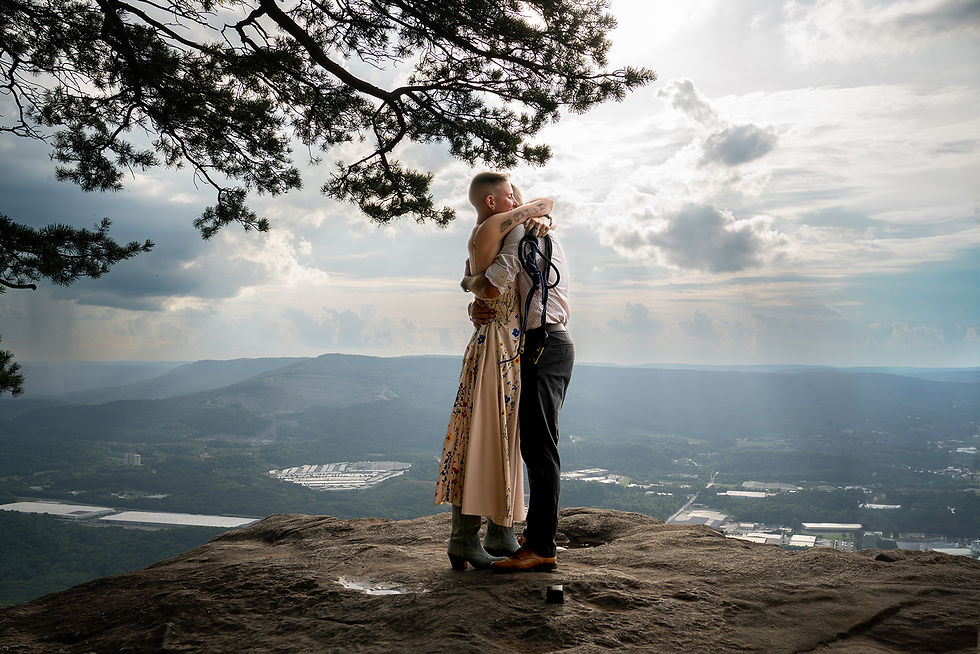
Sunset Rock is one of the most striking overlooks in the Chattanooga and Lookout Mountain area.
The rocky edge, layered views and changing evening light create an atmosphere that feels dramatic, romantic and adventurous without requiring an all-day hike.
I have personally photographed couples at Sunset Rock, and it creates a beautiful setting for intimate photographs.
Sunset Rock is best for couples who want:
Dramatic rocky scenery
Chattanooga and valley views
Sunset portraits
A small, intimate experience
A short outdoor adventure
A combination of mountain photographs and a city celebration
Access and privacy
Sunset Rock is a popular location for hikers, climbers and visitors watching the sunset.
Parking is very limited, and the trail and rocky areas require supportive shoes and careful movement. Large guest groups would be difficult to accommodate comfortably.
A weekday or non-peak time will generally create a calmer experience.
Ceremony and permit considerations
Sunset Rock is part of the Lookout Mountain landscape within Chickamauga and Chattanooga National Military Park. The National Park Service currently requires a Special Use Permit for weddings and other special events within the park. Couples should contact the park directly to discuss their exact plans and confirm the current ceremony, group-size and permit requirements for Sunset Rock.
Policies and approved uses can change, so written confirmation from the park is always the safest approach before inviting guests or making nonrefundable plans.
Photographer’s perspective
Sunset Rock offers a great deal of visual impact within a relatively small area.
The rocky formations can frame close, emotional photographs while the open views create dramatic wide portraits. Because there is limited room near the overlook, the experience is best kept intimate and flexible.
Sunset Rock can also work beautifully as a portrait destination following a ceremony at another Chattanooga or Lookout Mountain location.
The combination of mountain scenery and nearby city restaurants, hotels and nightlife makes it a strong choice for couples who want both nature and celebration.
1. Max Patch
Why couples love it
Max Patch offers the kind of wide-open Appalachian Mountain views that make you feel as though you have stepped into another world.
The grassy summit provides sweeping views in nearly every direction. Instead of standing at a single overlook, you are surrounded by rolling mountain layers, open sky and a landscape that feels enormous.
Although Max Patch is located just across the Tennessee border in North Carolina, it remains a popular choice for couples staying in East Tennessee, Gatlinburg, Asheville or the surrounding mountain region.
Max Patch is best for couples who want:
Open mountain scenery
A grassy landscape
A moderate outdoor adventure
Wind and movement in their photographs
Sunrise or sunset portraits
An experience that feels wild without requiring a full-day hike
Access and privacy
Max Patch is a well-known hiking destination and can become crowded during weekends, autumn and pleasant weather.
The landscape is also very exposed. There is little protection from wind, rain, direct sun or sudden temperature changes.
A weekday sunrise or carefully planned evening visit usually creates a calmer and more visually interesting experience.
Photographer’s perspective
Because the landscape is open, the time of day matters tremendously.
Midday sun can be bright and harsh, while early morning fog, golden evening light or dramatic clouds can completely transform the scenery.
Wind is also part of the experience. Flowing dresses, veils, hair and movement can create photographs that feel alive rather than overly posed.

4. Alum Cave Bluffs
Why couples love it
Alum Cave Trail is one of the most recognizable hikes in Great Smoky Mountains National Park.
The trail passes through forest, crosses mountain streams and leads to distinctive geological formations. It is a true hiking experience rather than a quick stop for photographs.
Alum Cave is best for couples who want:
A physically active wedding day
Forest and mountain-trail photographs
Documentary coverage of the journey
An adventurous experience together
A ceremony elsewhere followed by a meaningful hike
Wedding photographs that feel immersed in nature
Access and privacy
The hike requires time, elevation gain, proper footwear, water and preparation for changing weather.
It is also a popular trail, so couples should expect to share it with other hikers.
Wedding attire may be packed and changed into later, or couples may choose clothing that allows them to move comfortably throughout the experience.
Ceremony considerations
Great Smoky Mountains National Park limits wedding ceremonies to designated locations and requires a wedding permit.
Alum Cave Bluffs should therefore be approached as a potential adventure or portrait destination rather than assumed to be an approved ceremony site.
Photographer’s perspective
An adventure hike is most meaningful when the hike itself becomes part of the story.
The photographs might include tying your boots, adjusting a backpack, walking through the forest, helping each other across rocky areas and resting together along the trail.
Those in-between moments often become just as meaningful as the photographs taken at the final destination.


5. Ozone Falls
Why couples love it
Ozone Falls is a dramatic waterfall surrounded by rock formations and a natural amphitheater.
The scenery feels cinematic, secluded and completely different from Tennessee’s open mountain overlooks.
It can be a beautiful option for couples who want a small waterfall experience without committing to an all-day backcountry hike.
Ozone Falls is best for couples who want:
Dramatic waterfall photographs
Rocky and atmospheric scenery
A short but adventurous outing
A very small ceremony or portrait experience
Minimal décor
A location that already feels visually complete
Access and privacy
Although the trail is relatively short, the terrain can be rocky, uneven and slippery.
Formal shoes are rarely the best choice for navigating the area. Couples may want to hike in supportive shoes and change when they reach a safe portrait location.
Ozone Falls is also a popular public destination, so privacy cannot be guaranteed.
Ceremony considerations
Ozone Falls is a protected Tennessee state natural area.
Photographer’s perspective
Water level, recent rainfall and the time of day will change how the waterfall photographs.
The large rock formations create dramatic scale, but I would balance those wide environmental portraits with close documentary photographs so that your connection does not become lost within the landscape.

6. Roan Mountain
Why couples love it
Roan Mountain is known for open ridgelines, wildflowers, fog, mountain meadows and extraordinary Appalachian views.
It can feel light and romantic on a clear summer evening or dramatic and mysterious when clouds move across the mountain.
It is important to understand that “Roan Mountain” can refer to multiple areas. Roan Mountain State Park offers established facilities, while Carver’s Gap, the Appalachian Trail and the high-elevation balds involve different access points and land-management requirements.
Roan Mountain is best for couples who want:
Mountain meadows
Wildflowers
Fog and dramatic weather
Open ridgeline views
An Appalachian Trail experience
A mixture of established facilities and adventurous portraits
Access and privacy
Some areas near Roan Mountain State Park are relatively easy to reach, while the high-elevation balds require more hiking.
The exposed landscape can be windy and significantly colder than surrounding towns.
Rhododendron season and peak autumn color can bring large numbers of visitors.
Ceremony considerations
Ceremonies within Roan Mountain State Park should be coordinated with Tennessee State Parks.
Plans involving Carver’s Gap, the Appalachian Trail or Grassy Ridge may require communication with a different managing agency. Make sure the permission you receive applies to the exact location you intend to use.
Photographer’s perspective
Roan Mountain weather can change within minutes.
A clear view may become foggy, and a warm afternoon can quickly turn cold and windy.
Instead of depending on one very specific weather condition, I recommend building flexibility into the timeline and embracing the mountain as it appears on your day.
Clear skies create sweeping views. Fog creates intimacy, softness and atmosphere. Both can be incredibly beautiful.

7. Cades Cove
Why couples love it
Cades Cove is one of the strongest overall choices for a Smoky Mountain elopement.
The valley combines open fields, mountain views, wildlife and historic structures without requiring a difficult hike.
It also offers several distinct settings within one area, allowing couples to create a varied gallery while experiencing the landscape at a relaxed pace.
Cades Cove is best for couples who want:
Classic Great Smoky Mountains scenery
Relatively easy access
Open fields and mountain views
Historic churches
A small number of guests
Wildlife and nature
Several portrait locations
A ceremony that feels peaceful and timeless
Access and privacy
Cades Cove is one of the most visited areas in Great Smoky Mountains National Park.
Traffic, wildlife, road schedules, parking and seasonal visitation can all affect your timeline.
A permit does not provide exclusive use of the area. Weekday dates, sunrise ceremonies and thoughtful location choices can help create a quieter experience.
Ceremony and permit considerations
All weddings and elopements within Great Smoky Mountains National Park require a Special Use Permit and must take place at an approved ceremony location.
Each location has its own limits involving guests, vehicles, ceremony time and décor.
Parking tags are required separately, and drones cannot be used inside the national park.
Photographer’s perspective
Cades Cove is much more than a single mountain view.
A complete gallery can include arriving together, reading private letters, exchanging vows, walking through open fields, visiting historic areas and watching the light change across the valley.
The travel time around the loop must be included in the photography timeline.
Trying to visit too many stops can make the day feel hurried. Choosing a smaller number of meaningful locations usually creates a more emotional and visually cohesive story.

8. Virgin Falls
Why couples love it
Virgin Falls is a genuine backcountry adventure.
It offers an immersive forest experience, streams, waterfalls and the feeling of being far removed from a traditional wedding venue.
This location is best for couples who truly enjoy hiking and want the journey itself to become part of their wedding day.
Virgin Falls is best for couples who want:
A long hiking experience
A remote waterfall setting
Very few or no guests
Documentary coverage of the journey
A full or extended elopement experience
A wedding day built around adventure
Practical attire or a planned clothing change
Access and privacy
Virgin Falls involves a strenuous hike with uneven terrain, elevation changes and backcountry conditions.
Couples need to consider current trail conditions, daylight, water, food, weather, physical readiness and emergency planning.
Mileage alone does not communicate the difficulty of a mountain or waterfall trail.
Ceremony considerations
Virgin Falls is a protected state natural area.
Contact the managing agency to confirm current trail access, group-use policies, ceremony approval and professional photography requirements.
A backup location is particularly important because storms, high water, trail damage or extreme temperatures may make the original plan unsafe.
Photographer’s perspective
A Virgin Falls elopement should not be rushed.
The hike, changing landscape, moments of rest, private conversations and anticipation are all part of the story.
This type of experience usually requires enough photography coverage to document more than a brief ceremony and several portraits at the waterfall.
Choose Virgin Falls because you value the adventure—not simply because you want a waterfall in the background.

9. Kuwohi, Formerly Clingmans Dome
Why couples love it
Kuwohi is the highest point in Great Smoky Mountains National Park and offers some of the most expansive mountain views in the region.
The location was formerly known as Clingmans Dome, a name couples may still see in older articles, signs and search results.
Kuwohi is particularly beautiful when mountain layers disappear into haze, clouds move through the landscape or evening light settles across the ridges.
Kuwohi is best for couples who want:
High-elevation scenery
Layered mountain views
Dramatic fog or clouds
Sunset and blue-hour photographs
A shorter mountain experience
Cooler temperatures
A setting that feels expansive and atmospheric
Access and privacy
The road to Kuwohi is seasonal and can close because of winter weather, road conditions or park operations.
Temperatures may be considerably colder than they are in Gatlinburg or at lower elevations.
Kuwohi is a popular destination, and complete privacy should not be expected.
Ceremony and permit considerations
Great Smoky Mountains National Park restricts permitted Kuwohi ceremonies to its designated ceremony area.
Couples must follow the current permit conditions involving location, timing, guests, vehicles and ceremony activity.
Always review the permit carefully rather than relying on photographs or information from an older elopement.
Photographer’s perspective
Kuwohi is a perfect example of why mountain weather should not be viewed as a disappointment.
A clear sunset can create colorful, expansive photographs. Fog can create softer, moodier images that feel intimate and cinematic.
The goal should not be to reproduce one photograph found online. It should be to work creatively with the mountain and the atmosphere that exist on your wedding day.

10. Raven’s Point
Why couples love it
Raven’s Point offers rugged cliffside scenery and an experience that feels earned.
It is one of the most adventurous destinations in this guide and is best suited to couples who genuinely enjoy hiking.
The surrounding Fiery Gizzard landscape includes forests, rock formations, overlooks and the kind of scenery that feels far removed from everyday life.
Raven’s Point is best for couples who want:
A demanding hiking elopement
Rugged cliffs
Remote forest scenery
Very few or no guests
A full-day experience
Documentary coverage of a real adventure
A destination that does not feel staged
Access and privacy
Reaching Raven’s Point requires a substantial hike over rocky and sometimes difficult terrain.
Weather, heat, elevation changes, available water and the couple’s hiking pace all need to be included in the plan.
Avoid building a tight ceremony schedule around an estimated trail time.
Ceremony considerations
Contact Fiery Gizzard State Park directly regarding ceremony approval, professional services, parking, group size and current trail conditions.
Leave-no-trace practices are especially important in sensitive natural areas.
Photographer’s perspective
The landscape naturally creates dramatic wide photographs.
My job is to capture that scale without allowing the couple’s story to disappear inside it.
Wide environmental portraits should be balanced with photographs of hands, facial expressions, movement, laughter and the quieter moments that reveal what the adventure felt like.
11. Burgess Falls State Park
Why couples love it
Burgess Falls State Park is one of the most dramatic waterfall settings in Middle Tennessee. Located on the Falling Water River, the park contains four waterfalls—a series of cascades followed by upper, middle and lower falls—with the largest waterfall dropping 136 feet into the gorge below.
The combination of rushing water, layered rock walls and dense forest gives Burgess Falls a bold, romantic quality. It is especially beautiful for couples who want their elopement photographs to feel adventurous without committing to a strenuous, all-day backcountry hike.
Burgess Falls is best for couples who want:
A dramatic Tennessee waterfall
Forest and riverside scenery
A shorter outdoor adventure
An intimate ceremony or portrait experience
Powerful wide landscape photographs
A location within reach of Middle Tennessee
Spring greenery or rich autumn color
Access and privacy
The park’s trail follows the river past several cascades and overlooks before reaching views of the main waterfall. Although the route is shorter than many backcountry waterfall hikes, portions can be steep, uneven or slippery, particularly after rain.
There is no land access to the base of Burgess Falls from the state park. The base can only be approached by boat or kayak from the Cane Hollow Recreation Area, and Burgess Falls does not have a designated swimming area.
Because the park is a popular day-use destination, couples should expect other visitors during weekends and peak fall color. A weekday morning can provide a quieter experience and softer light.
Ceremony considerations
Couples interested in holding a ceremony at Burgess Falls should contact the park directly before finalizing their plans. Tennessee State Parks may require advance approval, a reservation or a Special Use Permit depending on the location, guest count, décor and services involved.
A very small ceremony near an approved overlook or established park area may be more practical than attempting to hold the vows close to the water. The park can confirm which spaces are currently available and whether any restrictions apply.
A ceremony at an approved park location can also be followed by waterfall portraits, allowing guests to participate without requiring everyone to navigate the more difficult sections of the trail.
Photographer’s perspective
Burgess Falls creates extraordinary scale. Wide photographs can show the couple surrounded by the cliff walls, forest and powerful movement of the water, while closer documentary images preserve their expressions and connection.
The amount and appearance of the water can change with recent rainfall, and the surrounding trees create a mixture of bright highlights and deep shadows. Overcast conditions or softer morning light can be especially flattering because they allow the details of the waterfall, rock and couple to remain visible in the same photograph.
For couples considering photographs from the water, reaching the base by kayak requires a separate plan for weather, water conditions, attire, equipment protection and safe transportation. It can create an incredible adventure, but it should be planned as a meaningful part of the experience rather than treated as a quick portrait stop.
Drone photography also requires written approval from the Tennessee State Park manager and must follow all applicable flight and safety requirements.


Which Tennessee Elopement Location Is Best for You?
Every couple will define the perfect location differently.
Here are several starting points based on the experience you want.
Best locations for easier access
Consider:
Cades Cove
Kuwohi
An established Fall Creek Falls location
Roan Mountain State Park
A permitted Chattanooga or Lookout Mountain location
These choices can work well when family members are attending or when you want to spend more of the day celebrating rather than hiking.
Best locations for waterfalls
Consider:
Fall Creek Falls
Foster Falls
Ozone Falls
Virgin Falls for experienced hikers
The most dramatic waterfall viewpoint may not be the safest or most practical location for the ceremony itself. An approved ceremony area can be paired with waterfall portraits afterward.
Best locations for mountain views
Consider:
Cades Cove
Kuwohi
Roan Mountain
Sunset Rock
Max Patch as a nearby North Carolina option
Best locations for a true hiking adventure
Consider:
Raven’s Point
Virgin Falls
Alum Cave Trail as a post-ceremony adventure
The high-elevation Roan Mountain area
Best locations for including family
Consider:
Cades Cove
Fall Creek Falls State Park
Roan Mountain State Park
Established Chattanooga-area locations
An accessible ceremony followed by private adventure portraits

How Much Does a Tennessee Elopement Cost?
A small guest count does not automatically mean every elopement is inexpensive.
The total investment depends on where you choose to go, how long the experience lasts and what you want to include.
Potential expenses may include:
Park or special-use permits
Venue or site reservations
Parking
Photography
Planning assistance
Officiant services
Marriage-license costs
Hair and makeup
Florals
Attire
Lodging
Transportation
Meals, cake or a picnic
Guest accommodations
Travel between locations
Weather backup arrangements
An easy-access one-hour ceremony will require a different investment and timeline from a full-day waterfall hike or a multi-location Smoky Mountain experience.
Photography coverage should reflect the experience you are creating.
A longer elopement may include getting ready, a first look, private vows, family photographs, hiking, an intimate meal, sunset portraits, film photography or meaningful activities you enjoy together.

How Your Location Affects Your Elopement Photography
Light changes from one environment to another
Open mountain overlooks are often most flattering around sunrise or sunset.
Waterfalls may photograph better when the area is evenly shaded. Forests can become dark much earlier than open fields.
A well-planned timeline accounts for the way light behaves at the exact location.
Travel takes longer than expected
Mountain roads, wildlife, traffic, trail conditions, parking and guest coordination can all add time.
A relaxed timeline gives you room to experience the day instead of rushing from one photograph to the next.
Tennessee weather can change quickly
Depending on the season and elevation, you may experience sunshine, heat, humidity, rain, fog, wind or cold temperatures within the same day.
Bring:
Supportive shoes
Water
Layers
Clear umbrellas
Towels
Touch-up supplies
Bug spray
Sunscreen
A safe change of clothing
A flexible backup plan

A complete gallery includes more than scenery
Wide environmental portraits are beautiful, but your elopement gallery should also preserve the people and emotions inside the landscape.
Your photographs can include:
Getting ready
The anticipation before the ceremony
Private vows
The people who joined you
Reactions you may not have seen
Wind, fog, rain and changing light
Quiet moments between major events
Artistic portraits designed to be printed
Documentary photographs that show how the day felt
I photograph elopements through a combination of digital photography, film photography, documentary storytelling and editorial portraiture.
Aerial imagery may also be incorporated where it is legal, safe and appropriate. Drones are not permitted inside Great Smoky Mountains National Park.

Why Your Wedding Photography Matters
A beautiful location creates the setting for one of the most meaningful days of your life.
It deserves to be thoughtfully chosen and fully experienced.
But after your vows have been exchanged, the flowers have been gathered, the music has ended and the park or venue has prepared for its next visitors, you leave with each other, your rings and your photographs.
Your photographs preserve:
The people who were present
The landscape you chose
The design you spent months creating
The reactions you did not see
The quiet moments between the plans
The movement of your clothing in the wind
The changing weather
The way the entire day looked and felt
That is why I approach an elopement as more than a ceremony in front of a beautiful view.
The landscape is part of your story, but the experience and connection between you are what give the photographs meaning.

Frequently Asked Questions About Tennessee Elopement Locations
Can we arrive at a Tennessee park and get married without making arrangements?
You should always contact the park or managing agency first.
Many national parks, state parks, natural areas and historic properties require advance approval, a special-use permit or a reservation for weddings and organized events.
Public access does not automatically mean every type of ceremony is allowed.
Do all Tennessee state parks have the same wedding rules?
No.
Wedding locations, availability, fees, guest limits and reservation requirements vary by park.
Contact the individual park rather than assuming that one Tennessee state park’s policies apply to another.
Can we get married at Sunset Rock?
Sunset Rock is located within the Lookout Mountain landscape managed by Chickamauga and Chattanooga National Military Park.
Because weddings and special events within the park require authorization, contact the National Park Service with the details of your ceremony and request written confirmation of the current requirements for Sunset Rock.
The location can also be used as a beautiful portrait destination when your ceremony is held elsewhere.
Can we have our ceremony at Alum Cave Bluffs?
Alum Cave Bluffs is not generally listed as a designated Great Smoky Mountains National Park ceremony location.
Consider holding your ceremony at an approved location and treating Alum Cave Trail as a separate hiking or portrait experience after confirming current park requirements.
Do we need a permit for a Great Smoky Mountains elopement?
Yes.
Weddings and elopements inside Great Smoky Mountains National Park require a Special Use Permit and must follow the park’s approved-location and ceremony rules.
Apply early, particularly when planning for autumn or another popular season.
Which Tennessee elopement locations require the least hiking?
Cades Cove, Kuwohi, established Fall Creek Falls spaces and Roan Mountain State Park may provide more accessible possibilities.
The exact amount of walking will depend on the ceremony site, parking, road conditions and the needs of the couple and guests.
Are Tennessee waterfall locations accessible?
Some waterfall overlooks are relatively easy to reach, while trails leading to the base of a waterfall may be steep, rocky or slippery.
Never rely solely on the number of miles listed for a trail. Terrain, elevation and weather can make a short trail physically demanding.
Are drones allowed at Tennessee elopement locations?
Drone rules depend on the exact property.
Drones are prohibited inside Great Smoky Mountains National Park. Other locations may have restrictions based on the land manager, weather, crowds, wildlife, airspace and safety.
Aerial photography should only be promised after the location and current rules have been verified.
What happens if it rains on our elopement day?
Rain does not automatically ruin an elopement.
The plan may include changing the order of the day, adjusting the ceremony time, using clear umbrellas, moving to a safer approved area or embracing fog and rain as part of the experience.
Mountain and waterfall weather can create photographs that are moody, romantic and completely unique.
Safety should always come before recreating a particular photograph.
Can we invite guests to our Tennessee elopement?
Yes, but the number of guests may affect which locations are appropriate.
Some sites have strict limits involving guests, vehicles, ceremony duration and seating. Remote trails may also be impractical for children, older relatives or anyone with mobility concerns.
An accessible ceremony followed by a private adventure is often the best way to include both family and outdoor exploration.
Your Tennessee Elopement Should Feel Like You
You do not have to choose between meaningful documentary photographs and artistic portraits.
You do not have to choose between having an adventure and slowing down long enough to be present.
And you do not have to plan everything alone.
As a Tennessee native, photographer, planner and officiant, I help couples think through the full experience: the location, permits, timeline, lighting, weather, guest needs and the small personal details that make the day feel like their own.
Your elopement can be peaceful, adventurous, elevated, playful, emotional or a combination of all of those things.
The goal is not to perform a wedding for the camera.
The goal is to create a day you genuinely want to live—and photographs that allow you to feel it again.
About Nicole and Destination Life Photography
Nicole is a Nashville and Tennessee native with approximately 16 years of experience in the wedding industry.
Through Destination Life Photography, she helps couples plan and photograph intimate weddings and elopements throughout Tennessee, Great Smoky Mountains National Park and destinations beyond.
Her work combines documentary storytelling, editorial and artistic portraiture, digital photography, film photography, planning guidance, timeline assistance, location expertise and aerial imagery where legally permitted.
Her goal is to create photographs that are visually beautiful, emotionally honest and worthy of being held onto long after the wedding day is over—images you can feel.


Comments