
A Sun Point Elopement in Glacier National Park: Eight Hours From Lake McDonald to Baring Falls

Updated: Aug 3
Published December 29, 2025
Last reviewed and updated August 2, 2026
Some couples plan an elopement as a single moment.
These two planned theirs as a journey.

A Sun Point elopement gives couples sweeping views across St. Mary Lake without requiring a long backcountry hike for the ceremony itself. For this real Glacier National Park adventure, we turned Sun Point into the emotional center of an eight-hour day that also included a cabin first look, Lake McDonald, Going-to-the-Sun Road, Baring Falls, and a picnic in the back of the car.
The couple had driven from West Virginia as part of a one-month elopement road trip. We spent eight months planning a wedding day that would feel less like a performance and more like one unforgettable stretch of their life together.
Then they overslept.
The plan changed, the adventure began, and we still experienced every place that mattered to them.
If you are beginning with the bigger questions—locations, permits, photography, timing, and how to connect everything without rushing—explore my Glacier National Park elopement photography and planning experience.
Table of Contents
A quick look at this eight-hour Glacier elopement
From West Virginia to Glacier National Park
The morning that did not go according to plan
Getting ready and the cabin first look
Lake McDonald
Going-to-the-Sun Road
The Sun Point ceremony
Hiking to Baring Falls
A back-of-the-car wedding picnic
Sun Point permit and access information
A photographer’s perspective
Glacier elopement cost considerations
Frequently asked questions
Planning your own Glacier elopement

A Quick Look at This Eight-Hour Glacier Elopement
Part of the day | Location | What it added to the story |
Getting ready | Their cabin | Quiet anticipation, personal details, and documentary moments |
First look | Near the cabin | Privacy and an emotional beginning |
Lakeside exploration | Lake McDonald | Clear water, colorful stones, reflections, and stillness |
Scenic journey | Going-to-the-Sun Road | Mountain overlooks, spontaneous stops, and a sense of movement |
Ceremony | Sun Point | Sweeping views over St. Mary Lake |
Just-married hike | Baring Falls | Forest, water, movement, and playful portraits |
Celebration | Back of the car | A relaxed picnic and time to absorb the day |
An itinerary like this works because every location has a different purpose. The goal is not to collect as many backdrops as possible. It is to create a day with room for anticipation, vows, movement, rest, celebration, and photographs that feel connected from beginning to end.
View the Destination Life Photography elopement portfolio to see how documentary moments and artistic landscapes can belong in the same gallery.
From West Virginia to a Sun Point Elopement
Some couples plan an elopement as a single ceremony.
These two planned theirs as a journey.
They were already traveling from West Virginia on a one-month road trip when they contacted me about eloping in Glacier National Park. The park was not simply a place to stand for a few photographs. It represented the freedom, exploration, and connection to nature they wanted their marriage to begin with.
We spent eight months shaping the experience. We chose eight hours of coverage so the day could include getting ready, a first look, both sides of the park, a permitted ceremony, a hike, portraits, and a real celebration without turning everything into a race.
That amount of time also gave us something incredibly valuable: flexibility.
The Morning That Did Not Go According to Plan
The morning began with a message that made me smile: they had overslept.
It was more than a few minutes, so the original timeline no longer worked. We needed to adjust the order, protect their permitted ceremony time, and decide where we could recover time without making the experience feel hurried.
This is part of adventure elopement photography.
In a national park, a timeline can be affected by weather, traffic, parking, road conditions, crowds, trail conditions, wildlife, and energy levels. An experienced plan should be detailed enough to guide the day but flexible enough to survive real life.
We rearranged several stops and still reached every location that mattered.
Their morning did not need to be perfect. It needed to remain theirs.
Getting Ready and the Cabin First Look
We began with the details that would later bring them back to the start of the day: their rings, jewelry, clothing, hiking gear, and the small personal choices they had packed for the journey.
Getting-ready photographs add context to an elopement gallery. They preserve the quiet before everything becomes official—the nervous laughter, the final touches, the way the room looked, and the moment wedding clothes became real.
Their first look was simple and emotional. There was no elaborate production and no audience waiting for a reaction. It was just the two of them, surrounded by the landscape they had traveled so far to experience.
That private beginning helped ground the rest of the day.
Lake McDonald: Clear Water, Reflections, and Stillness
Our next stop was Lake McDonald.
The water was remarkably clear, with smooth stones visible below the surface and mountains reflected across the lake. After the movement of the morning, the shoreline gave them a place to slow down.
From a photography perspective, Lake McDonald adds quiet visual layers to an adventurous gallery. The reflective water, colorful shoreline stones, forest, and distant mountains create photographs that feel different from the dramatic open views at Sun Point.
The exact appearance of the lake depends on weather, wind, season, smoke, water level, and time of day. Reflections cannot be promised, but giving the location enough time allows us to respond to whatever the lake offers.
We did not rush this part of the day. Lake McDonald is the kind of place that naturally invites couples to breathe, look around, and realize they are standing inside the experience they spent months imagining.

Going-to-the-Sun Road: The Experience Between the Destinations
From Lake McDonald, we traveled west to east on Going-to-the-Sun Road.
The road was not simply transportation between photographs. It became part of the story.
Every turn revealed another overlook, patch of wildflowers, mountain wall, or place where the couple wanted to stop and breathe. We photographed them looking through binoculars, walking together, laughing at overlooks, and experiencing the park instead of posing through it.
Traveling through Glacier almost always takes longer than a map suggests. Parking, traffic, wildlife, roadwork, weather, and spontaneous stops can all affect the pace. That is why I intentionally leave breathing room in an adventure timeline.
A flexible schedule permits couples to notice what is happening around them.
It also gives us space to create different kinds of photographs: honest documentary moments, intimate portraits, wide environmental images, and gallery-worthy compositions in which the couple, light, emotion, and landscape belong together.
A Sun Point Ceremony Overlooking St. Mary Lake
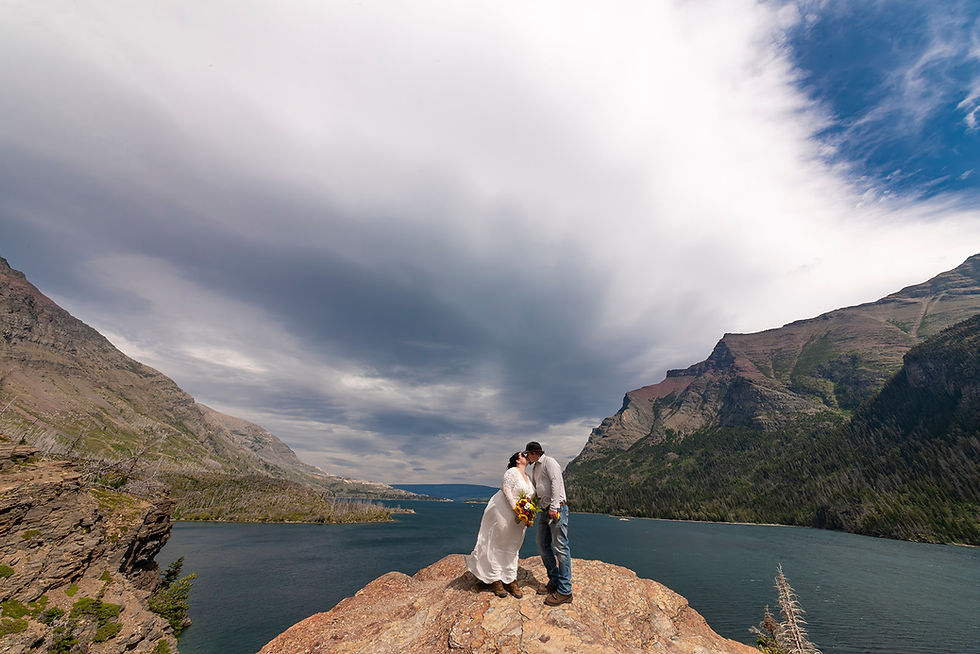
Sun Point was the emotional center of the day.
The couple exchanged vows above St. Mary Lake with mountains surrounding them and wind moving through the open landscape. There was no audience and nothing elaborate competing with their words.
Sun Point works especially well for couples who want unmistakable Glacier scenery without building a strenuous backcountry hike into the ceremony. The approach is comparatively short, although the rocky terrain, exposure, wind, seasonal conditions, and limited parking still need to be considered.
Photographically, the location provides several layers at once:
Open views across St. Mary Lake
Mountain peaks surrounding the water
Rocky foregrounds that give portraits depth
Wide compositions that show the scale of the landscape
Closer documentary photographs that keep the vows intimate
The strongest images do not make couples disappear into the scenery. They preserve both: the enormous place they chose and the deeply personal reason they were there.

Current Sun Point Wedding Permit Rules
The following information was reviewed on August 2, 2026. National Park Service policies, fees, closures, and access plans can change, so verify everything before making nonrefundable arrangements.
According to the Glacier National Park wedding-location rules, Sun Point currently:
Allows up to 20 total participants
Has typical vehicle access from the last week of May through mid-October
May experience spring closures because of plowing or avalanche danger
Does not allow tables, chairs, or décor
Allows snacks
May require the party to ski, snowshoe, or hike during seasonal road closures
The National Park Service currently limits wedding permits to two hours and allows no more than two permits at the same location per day. The permit does not provide exclusive access, reserve parking, or guarantee that roads will be open.
The Glacier National Park wedding-permit application currently requires a $125 nonrefundable application fee. Applications may be submitted up to one year before the ceremony but must be received at least 20 business days in advance.
A wedding permit is not a park entrance pass. Every vehicle or visitor must still have the appropriate entrance pass.
Because Glacier does not provide a public calendar showing ceremony availability, couples should prepare preferred and alternate choices when submitting an application.
Hiking to Baring Falls After the Ceremony
After the vows, we hiked toward Baring Falls.
This portion of the day felt completely different from the ceremony. The wide lake and mountain views gave way to trees, moving water, bridges, rocks, and the rhythm of walking together.
Their energy changed too. They were married, relieved, playful, and ready to explore.
Movement creates some of my favorite documentary photographs. A wedding dress lifted by the wind, hiking boots beneath its hem, a hand offered across uneven ground, and laughter during a rest stop tell viewers what the experience actually felt like.
The photographs were not simply about standing in front of a waterfall. They preserved the journey toward it: the trail, the effort, the pauses, the way they helped each other, and that unmistakable just-married energy.
Trails and waterfall areas can be wet, crowded, uneven, or temporarily closed. Proper footwear, extra time, current trail checks, and a willingness to adjust are more important than recreating a particular photograph.
A Picnic in the Back of the Car
After the hike, we opened the back of the car and had a picnic.
Their shoes came off. The pace softened. They talked, laughed, signed their marriage documents, and allowed themselves to absorb what had happened.
This was their reception.
A celebration does not need a ballroom to be meaningful. It can be favorite food, a blanket, a private toast, wedding cake from a local bakery, or a few quiet minutes together after the ceremony.
This unhurried part of the day was just as important as the mountaintop views. It showed them as they truly were together—comfortable, happy, and fully present.
Glacier National Park prohibits scattering or releasing items such as flower petals, rice, birdseed, balloons, bubbles, or sprayed champagne. Food, trash, and personal items should be packed out, and the ceremony area should be left as it was found.
Review the park’s current wedding FAQs and Leave No Trace requirements before deciding what to bring.
They Stayed Three Extra Days
The couple had planned to continue their road trip after the wedding.
Instead, they stayed in Glacier for three more days.
They explored more trails, overlooks, and quiet corners because one day did not feel like enough. That decision captured the spirit of their entire elopement: they followed the experience instead of forcing it to fit a rigid schedule.
If your travel plans allow it, I recommend arriving before the wedding and leaving space afterward. Extra days provide time to adjust to the elevation, learn the route, recover from travel, respond to weather, and enjoy the park without asking the wedding day to hold the entire trip.
Glacier is not a place that needs to be rushed. Give yourself time to settle into it.
A Photographer’s Perspective: Why an Eight-Hour Timeline Worked
Eight hours did not mean eight straight hours of posing.
It meant they had time to live the day.
Their coverage allowed room for:
Getting-ready photographs and personal details
A private first look
Lake McDonald
Travel across Going-to-the-Sun Road
Unplanned overlook stops
Their permitted Sun Point ceremony
Hiking to Baring Falls
A picnic and marriage-document photographs
Delays and a completely real morning hiccup
Shorter coverage may work for couples planning one ceremony location and nearby portraits. A half-day or full-day experience is usually more appropriate when connecting the west and east sides of the park, incorporating a hike, or telling the complete story from getting ready through celebration.
That recommendation is based on my professional experience rather than a park requirement.
The amount of photography coverage should support the kind of day you want to experience. It should never make you feel as if you are racing between locations just to complete a list of photographs.
Explore Destination Life Photography’s elopement collections to compare coverage possibilities. Destination experiences are customized around the route, hours, season, travel, and planning support involved.
Glacier Elopement Cost Considerations
There is no single total price for a Sun Point elopement. The final investment depends on the experience you create.
Possible costs include:
The current $125 nonrefundable Special Use Permit application fee
A Glacier National Park entrance pass
Photography coverage and planning assistance
Travel and lodging
Flowers or other permitted personal details
Wedding attire and hiking gear
Transportation or a rental vehicle
Food, picnic supplies, or a private dinner
Montana marriage-license and officiant arrangements
Guest accommodations or transportation
As of this review, Glacier’s standard private-vehicle entrance pass is $35 and is valid for seven days. Fees and policies can change, so verify the current Glacier National Park entrance fees.
Photography collections are tailored to the number of hours, route, planning needs, travel, and the story you want documented. Published pricing should be treated as a current starting point rather than a permanent quote.

2026 Going-to-the-Sun Road and Vehicle Information
For 2026, Glacier National Park states that vehicle reservations are not required. The park is instead piloting changes involving its shuttle system and limited-duration parking at Logan Pass.
This applies specifically to 2026 and should not be assumed for future seasons. Road-access plans change frequently.
Going-to-the-Sun Road is currently open for the 2026 season, but weather, wildfire, construction, snow, and emergency conditions can change access with little notice. Check the park’s current conditions immediately before traveling.
Private drone operation is prohibited inside Glacier National Park. My work may include aerial imagery only where it is lawful and appropriate; aerial photographs should not be promised or planned from within the park.
Why the Photography Matters
Glacier creates an extraordinary setting, but photography is how the couple gets to keep what happened there.
The wind will settle. The picnic will be packed away. The trail will welcome new visitors, and Sun Point will become part of someone else’s journey.
The couple leaves with each other, their rings, and their photographs.
Those images preserve:
The people who were present
The personal details they chose
The landscape they traveled across the country to experience
The reactions they did not see
The quiet spaces between the major events
The way the light, weather, and mountains looked
The way the day felt
My approach combines documentary storytelling with editorial and artistic portraiture. I photograph the moments that happen naturally, but I also create intentional compositions that hold the couple, emotion, light, and landscape together.
The goal is both a truthful record of the day and artwork they want to live with, images you can feel.

How I Help Couples Plan Glacier Elopements
I am Nicole Morehead, the photographer behind Destination Life Photography. I am a Nashville and Tennessee native with approximately 16 years of experience in the wedding industry, and I travel with couples for destination elopements throughout the United States and beyond.
My role can include:
Photography and visual storytelling
Custom timeline creation
Location and route guidance
Ceremony-site research
Permit assistance
Vendor recommendations
Weather and access planning
Backup-plan development
Digital and film photography
Officiant services when legally appropriate
Marriage-license and ceremony guidance
Aerial imagery only where legally permitted
I am not a Montana local, and I would never pretend to be. My authority on this particular experience comes from photographing and helping plan this real Glacier day, working across the route firsthand, and understanding how quickly an adventure timeline may need to change.
Frequently Asked Questions About Sun Point Elopements
Do We Need a Permit to Get Married at Sun Point?
Yes. Wedding ceremonies and vow exchanges at designated Glacier National Park locations require a Special Use Permit. The current nonrefundable application fee is $125.
How Many People Can Attend a Sun Point Wedding?
Sun Point currently allows up to 20 total participants. Confirm your total participant and vehicle count with the permit office when completing your application.
Does a Sun Point Permit Give Us Privacy?
No. A permit does not close the location or reserve it exclusively for your group. Other visitors can remain in the area.
An early or late ceremony may improve the atmosphere, but complete privacy should never be promised.
Can We Bring Chairs, Tables, or Ceremony Decorations?
Current Sun Point rules do not allow tables, chairs, or décor. Snacks are permitted, but all food and waste must be handled according to park rules.
How Long Is the Sun Point Wedding Permit?
Glacier currently writes wedding permits for two hours. That time covers arriving at the permitted location, setting up, holding the ceremony, and vacating the site.
The park currently allows wedding photographs before or after that period in areas open to the public, subject to ordinary visitor rules and closures.

What Is the Best Season for a Sun Point Elopement?
The park currently lists typical vehicle access from the last week of May through mid-October. However, spring snow, avalanche danger, weather, wildfire, and road operations can change access.
Most of Glacier is generally most accessible between mid-July and mid-September, but those dates also bring high visitation.
Can We Fly a Drone at Sun Point?
No. Visitors and photographers may not launch, land, or operate drones inside Glacier National Park.
Is Sun Point Suitable for Guests Who Do Not Want a Long Hike?
Sun Point provides dramatic scenery after a comparatively short approach, making it easier than many backcountry ceremony choices.
However, the ground can still be rocky and exposed, and Sun Point should not automatically be described as wheelchair accessible. Evaluate the individual needs of every guest before applying.
How Much Photography Coverage Do We Need?
A short ceremony and nearby portraits may fit within limited coverage.
A day connecting Lake McDonald, Going-to-the-Sun Road, Sun Point, and a waterfall hike generally benefits from half-day or full-day coverage so that travel and parking do not consume the entire experience.
What Happens if We Oversleep or the Timeline Changes?
The first priority is protecting the permitted ceremony time and reassessing the remaining route. Stops can sometimes be shortened or reordered, but road access and permit terms cannot be ignored.
Building additional time into the original plan provides the best chance of adapting without rushing.
Does Bad Weather Mean We Can Change Our Permit?
Not necessarily. Glacier National Park states that wind, rain, snow, smoke, and other natural weather conditions are generally not grounds for changing a permit.
If the permitted location is officially closed because of an emergency, the park may try to accommodate another arrangement, but a replacement is not guaranteed.
This is why a strong photography plan includes weather preparation and flexibility without depending on a guaranteed location change.
Your Glacier Elopement Can Feel Like a Real Day
The most meaningful part of this experience was not that every minute followed the original plan.
It was that the couple stayed present when the plan changed.
They drove across Glacier, exchanged vows above St. Mary Lake, hiked as newlyweds, ate together in the back of their car, and loved the park so much that they gave themselves three more days.
Their elopement was adventurous, but it was also quiet. It was visually extraordinary, but it remained personal. It produced gallery-worthy photographs because they were genuinely living something worth remembering.
If that is how you want your wedding day to feel, explore the complete Glacier National Park elopement experience.
When you are ready, check availability and begin planning your Glacier elopement. Your ideas do not have to be complete before you reach out. Helping you turn those first ideas into a thoughtful, beautiful experience is part of what I do.
About Nicole Morehead
Nicole Morehead is the photographer, planner, and experience curator behind Destination Life Photography. She is a Nashville and Tennessee native with approximately 16 years of wedding industry experience and more than 65 five-star reviews.
Her work blends emotionally honest documentary photography with editorial and artistic portraiture. She photographs digitally and on film, provides planning and timeline guidance, and travels with couples throughout the United States and beyond.
Her goal is to create photographs that preserve both how an elopement looked and how it felt,images you can feel.


Comments